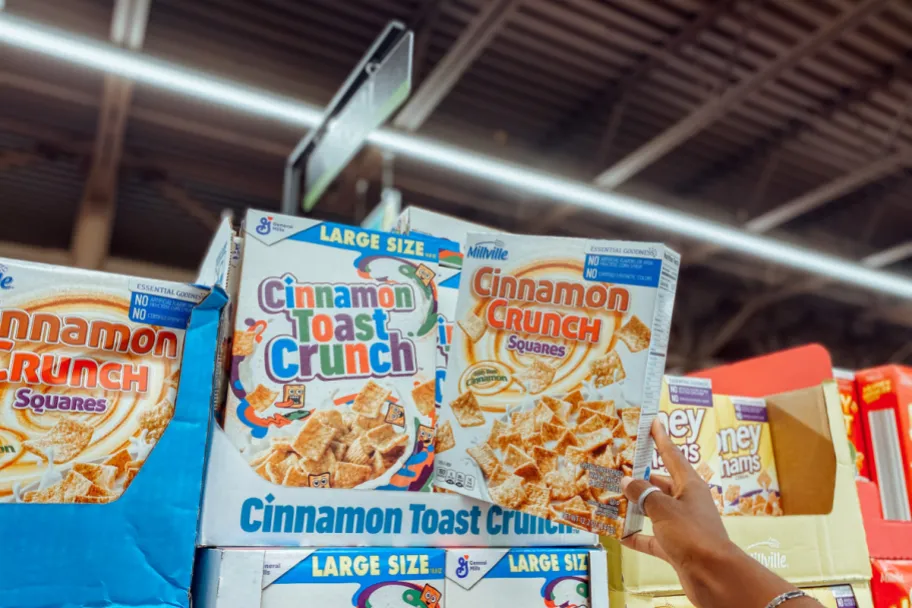
For years, small food brands had one easy advantage on the shelf. Next to the plain, budget-looking store brand, almost any thoughtful package looked premium. You didn’t have to be a design powerhouse. You just had to look better than the generic option sitting beside you.
That advantage is disappearing fast. Grocery chains are pouring money into their own labels, and the new store brands look sharp, modern, and confident. Here’s what changed, and what it means for the package you’re putting on the shelf next.
Store Brands Aren’t the Cheap-Looking Option Anymore
Private label hit a record 23.5% of U.S. unit sales in 2025, according to the Private Label Manufacturers Association. Through September 2026, store-brand unit sales were still growing slightly, while national brands slipped almost a full point. Most Gen Z shoppers now say store brands are just as good as the names they grew up with.
Retailers noticed. Aldi, Amazon Grocery, and Walmart have all redesigned their private label packaging in the last year. Walmart’s Great Value line got its first redesign in a decade. Hannaford rolled out new store-brand packs this year with clear product descriptions and high-resolution food photography. These aren’t afterthoughts anymore. Retailers are treating their labels like real brands, with their own identity and point of view.
Clean and Simple Is Now the Store-Brand Look
The minimal look that once signaled “indie” or “premium” is now what the grocery chain uses on its own pasta and pickles. Bold color, big legible type, and short, punchy words are exactly how industry consultants say store brands are winning shelf attention right now.
That creates a real problem for small brands that followed the same playbook. If your package is a clean white background, a sans-serif logo, and a nice product photo, you may now look a lot like the cheaper option two feet away. Shoppers will notice the price difference before they notice your story.
Your Price Has to Show Up in Your Design
When the store brand looks this good, your package has to explain why you cost more. Industry experts are already telling national brands they need packaging that proves the product is worth a premium. If big brands with national ad budgets are feeling that pressure, a small brand without those budgets feels it even more.
That proof has to be visible in seconds. It could be a distinctive shape, an unexpected color in your category, a clear signal of where the product comes from, or a sharp line about what makes it different. A package that only says “fresh” and “delicious” gives shoppers no reason to pay more.
Shoppers Meet You on a Screen First
Retail experts also stress that packaging has to work online as well as on the shelf, and look consistent in both places. More shoppers now see your product as a small thumbnail in a delivery app or online cart before they ever hold it in their hands.
That changes what good design means. Fine details, thin fonts, and subtle textures disappear at thumbnail size. The brands that hold up are the ones with one strong, simple element you can recognize at any size, from a phone screen to an end cap.
Looking Like the Leader Is Now a Legal Risk
Copying the category leader has always been a tempting shortcut. Use the same color, the same layout, and borrow some of their trust. Today, that shortcut comes with real risk. J.M. Smucker sued Trader Joe’s over packaging it says copied its Uncrustables, and in August a federal judge allowed that case to move forward. Mondelēz has filed a similar suit against Aldi over lookalike cookie packaging.
If the biggest companies in food are fighting over who looks like whom, a small brand has even less to gain by blending in. Some agencies now run reverse image searches on their own designs to make sure a new pack doesn’t feel too familiar. That’s a habit worth stealing.
What This Means for Growth
None of this means small brands can’t win on the shelf. Shoppers still want discovery, and they still pay more for products that feel special. Trader Joe’s built its whole business on store brands, with 82% of its unit sales coming from its own labels, by giving each product a clear personality.
The brands that keep growing will be the ones that stop competing on “clean” and start competing on distinct. They’ll know the one idea they own, design it so it reads from across the aisle and on a phone screen, and make it obvious why they’re worth the extra dollar.
The store brand isn’t your enemy. Looking like one is.


